What residents told us at the July Town Hall and how to join the group now taking it on
I've walked more or less the same route through Hackney Wick most mornings for years, and the honest truth is that you stop seeing it. Fly-tipping on a corner or blocked drains overflowing become normalised. You step around both, put your headphones back in, and get on with the day. Noticing takes effort, and most of us are out of practice.
Then you put a large sheet of paper on a table, fill a room with your neighbours, and everyone starts naming the same things at once.
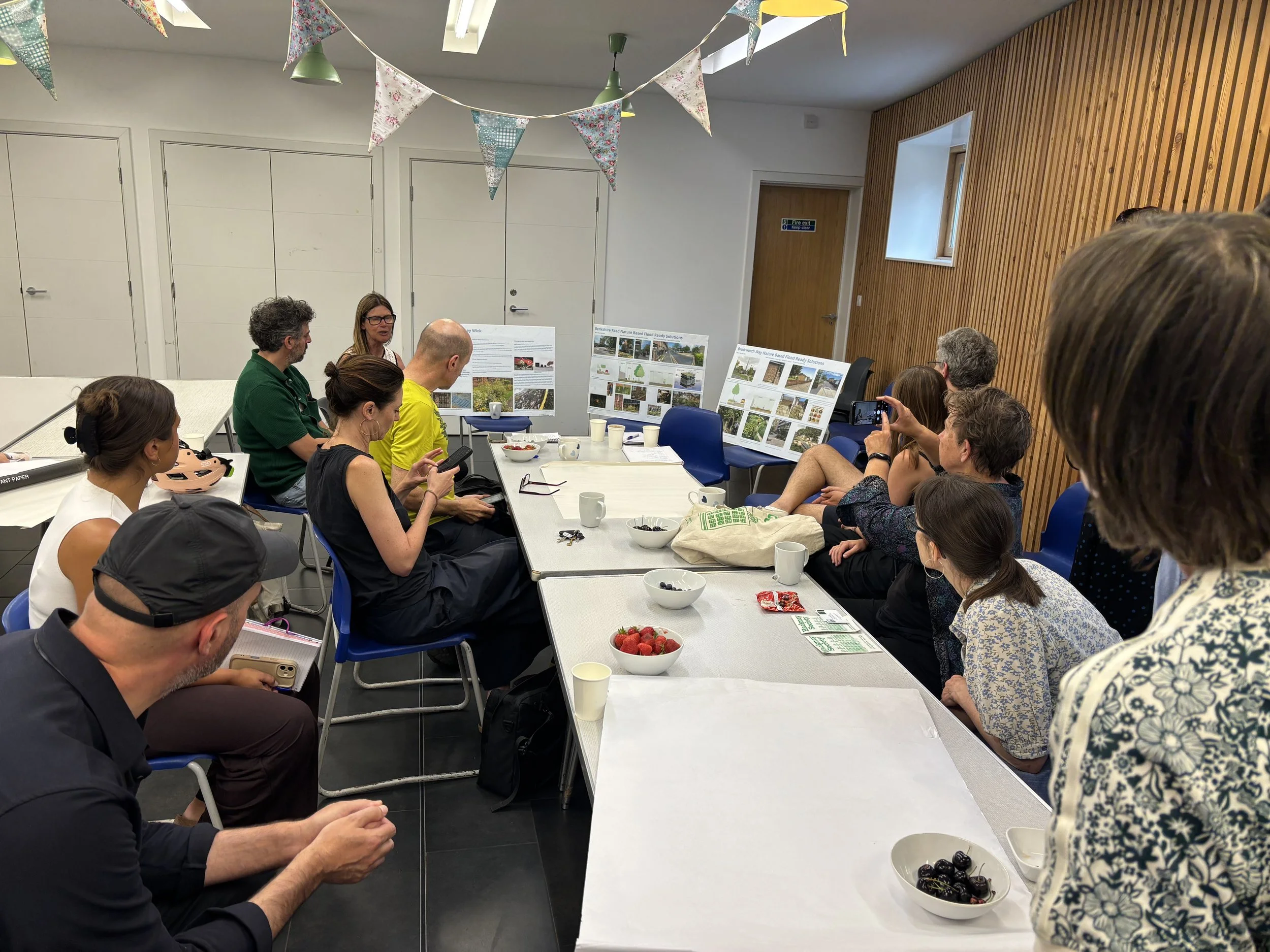
That was our July Hackney Wick Town Hall. We had come in with a set of ideas about the public realm we’ve been working on with Hackney Council and muf architects — rain gardens, greening, nature-based interventions. Residents gave the ambition a warm reception. They also, politely and unanimously, framed it in a wider context with lots of flashing red danger signals.
The nature-based ideas were "blue-sky thinking," we were told. Lovely. But the drains aren't being cleaned properly. So what exactly is the point of a new intervention when the existing infrastructure is serviced by fragmented contracts and the basics go unmanaged?
That was the moment the evening turned, and it has stayed with me since.
The basics are not a small ask
It would be easy to file that response under "residents want less ambitious things." That is not what happened. The room was asking for something considerably more ambitious & longer term.
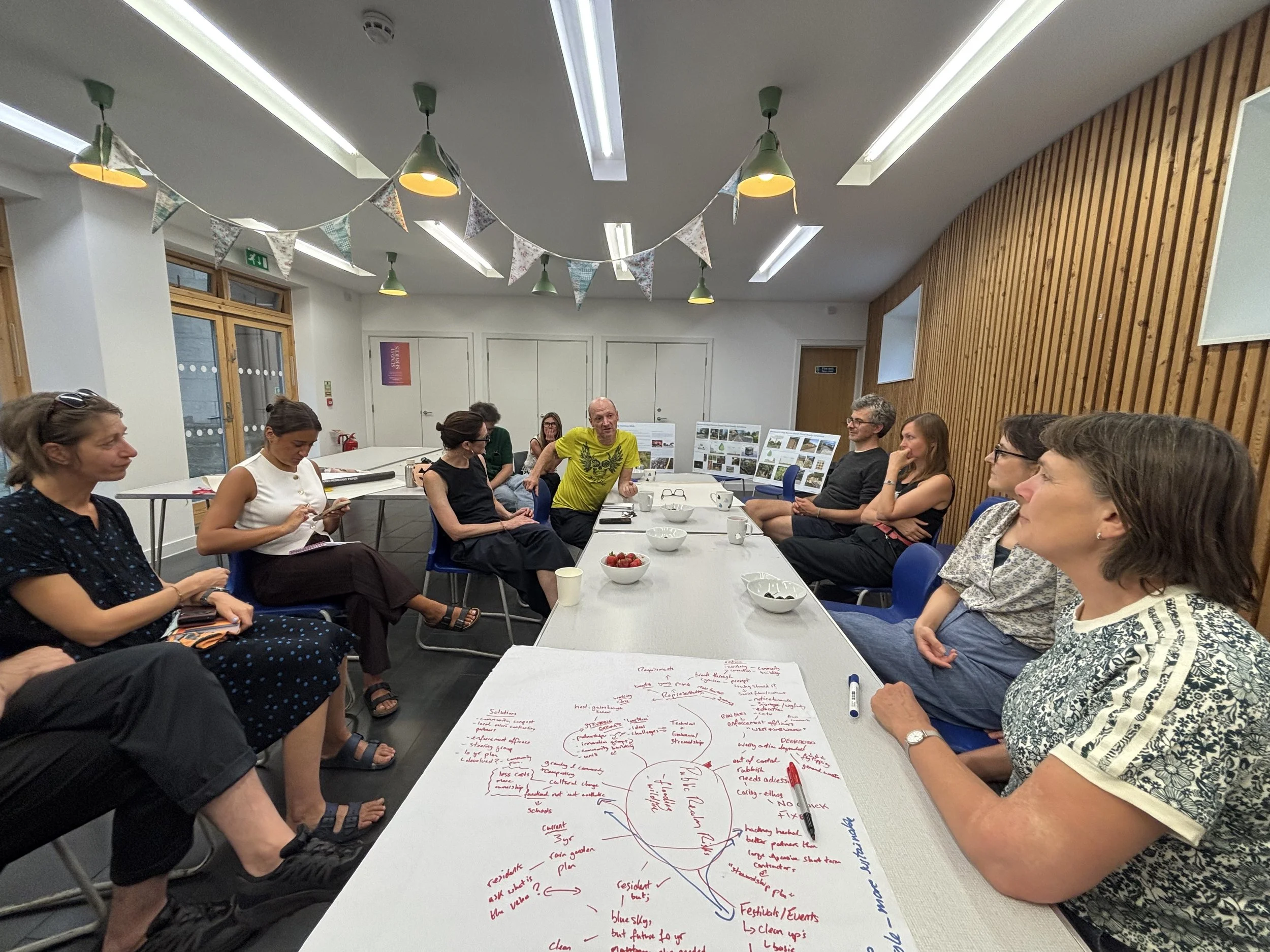
What people described was a public realm that feels out of control — rubbish, flooding, drains, fire risk — and, underneath it, a system nobody can point to and say that is who looks after this. Services arrive through separate short-term contracts. Waste services were described as slow to unblock problems. Hackney Council shared with us in the meeting that the management protocol for the rain garden plan currently runs for three years.
Three years. For something meant to manage water in a neighbourhood that will be here in three hundred.
That mismatch is the actual problem. And it explains the cynicism you hear on every doorstep. Which is not apathy. It is an accurate reading of the incentives.
The idea in the room: stewardship, not contracts
The proposal that emerged was simple to say and hard to do. Replace large, expensive, short-term contracts with roughly ten-year community stewardship plans.
A different arrangement. Local people holding real power over who services the area, with local organisations able to hold the work as part of a wider plan. The kind of thing that catches problems before they become issues, because the people doing it live here and have to look at the result.
This is close to the bone of how we work at CDT. We flow with what's already there rather than importing a solution. We are stewards, not saviours. And we would rather celebrate the broom and the reused plank than stage another round of innovation theatre.
The point residents made most sharply was that interventions must be functional, not just aesthetic, and framed as local investment and ownership, not as another cost line for the council.
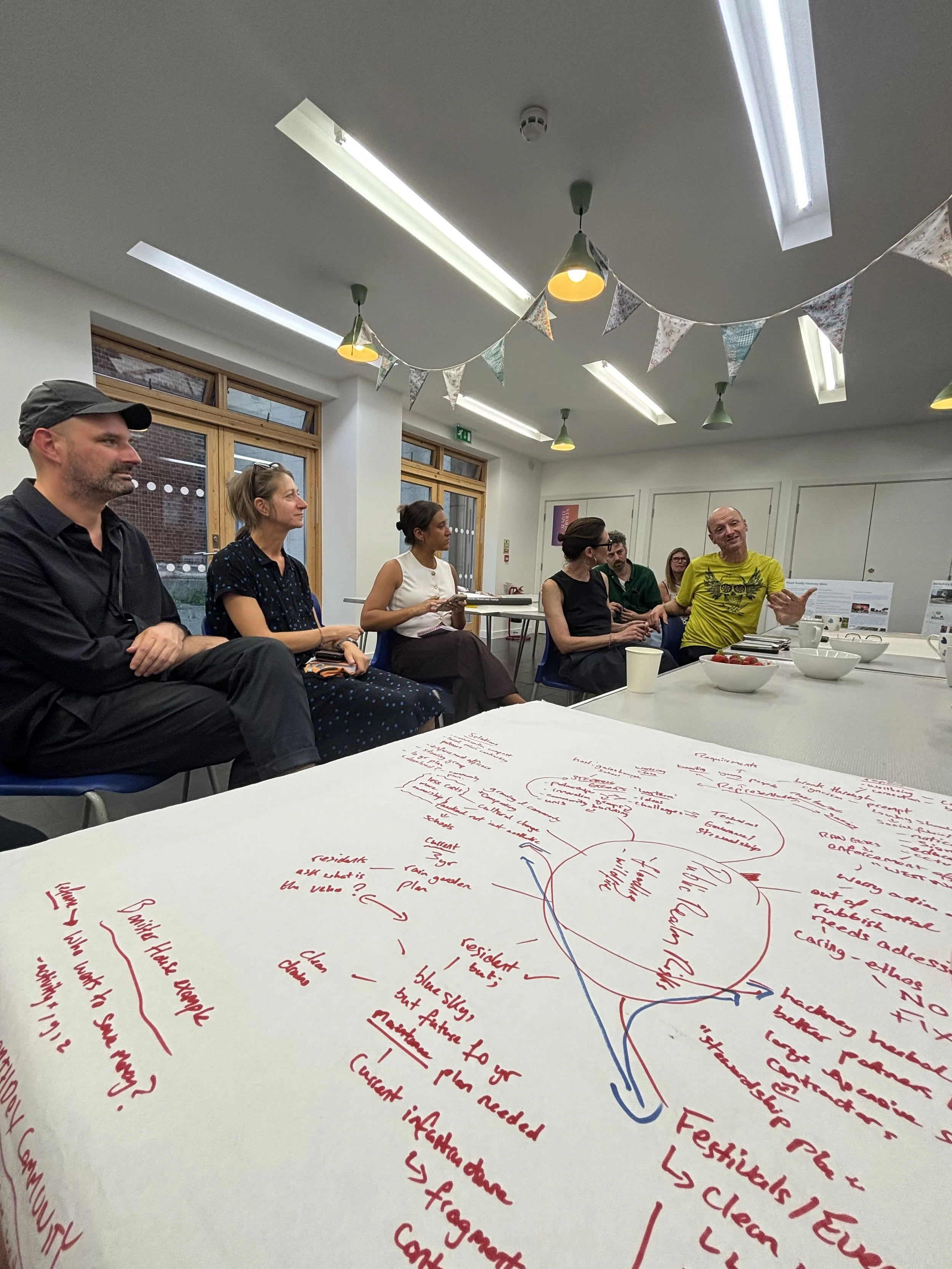
A group is forming. Join it.
Here is the honest state of play: after the Town Hall, a handful of residents came together to take this forward. Enough to make a proper working subgroup, but not enough to carry a neighbourhood.
But we want as many people as part of the conversation as possible. We're not looking for expertise. We're looking for people who will turn up, notice things, and hold a longer term view.