

Growing Together: Why the Right to Grow Matters in Hackney Wick
Our work has always been grounded in a simple conviction: that ordinary, everyday people should have a material and a moral say in how their area is shaped. That they should have real control over the land and buildings around them, and they should be held for the benefit of local people.
That conviction has never been harder to act on. In a climate where access to land and buildings is genuinely difficult — with rising land values, fierce development competition, and a growing awareness of just how attractive our neighbourhood has become — it gets ever harder to preserve what made this place, and its identity, worth caring about in the first place. And harder still to protect that character while making room for the good new things that come along too.
We've had some good fortune recently, securing a long lease on 119 Wallis Road, thanks to work with Halcyon DP. But the underlying challenge hasn't gone away. We're no less undaunted, no less passionate about facing it. We keep finding opportunities, direct and indirect, to hand agency back to the people of Hackney Wick.
Climate justice as a civic idea
One route we've been exploring is climate change and climate justice — most recently through our work on The Loop, our circular economy hub. These are civic-led ideas. They showcase a new way our buildings can serve local people and local businesses and local government, and they shift the perception of waste: from a problem to be managed into a rich resource full of opportunity.
A big part of that climate work is also about biodiversity. And there's something here that sits right in the heart and soul of Hackney — the community's right to grow. The right to access green space. To grow fruit and vegetables, plant flowers, bond with one another, feel at ease and be themselves, in places that are genuinely inclusive and shaped by a collective vision.
What we've been doing this summer
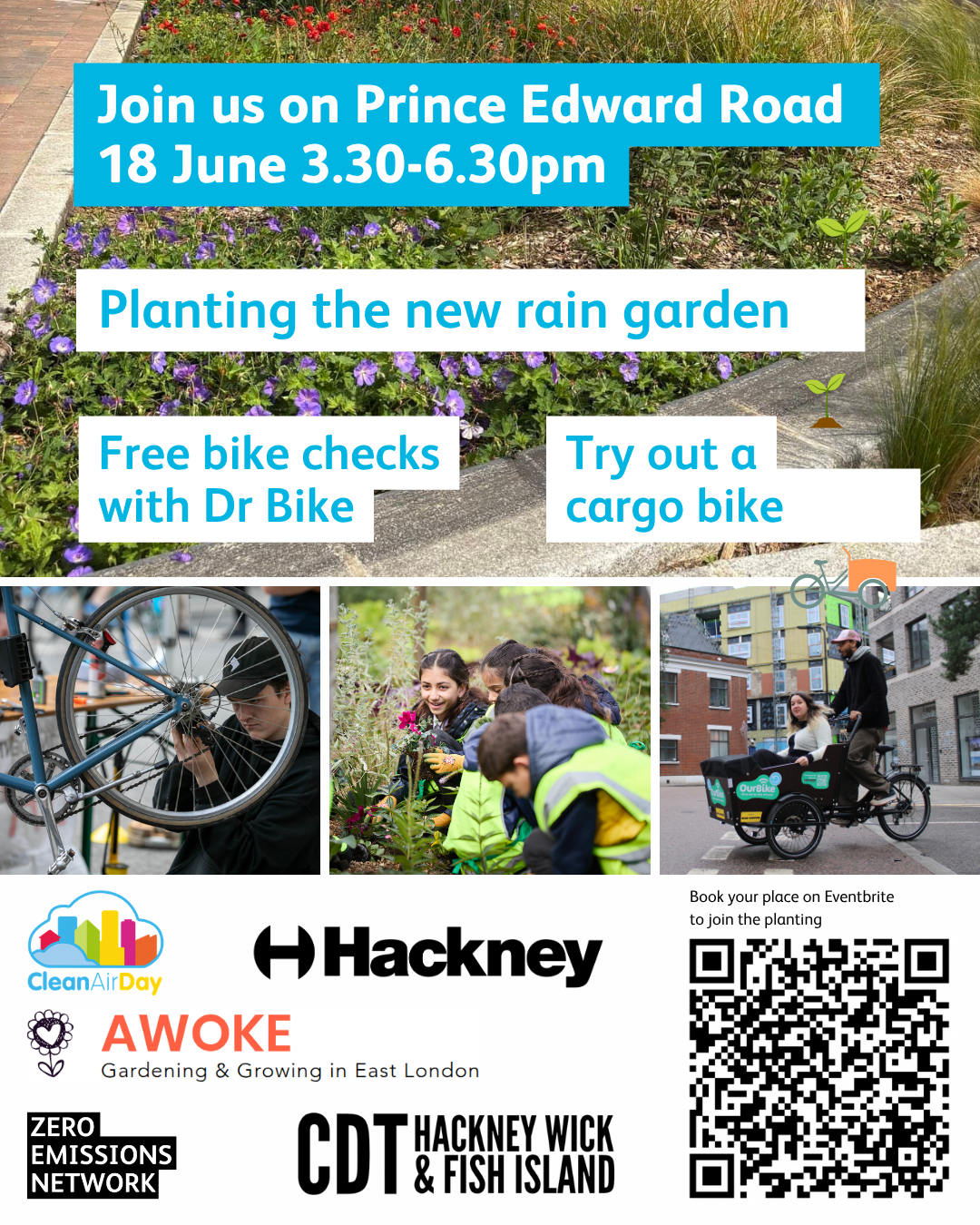
Starting this summer, that's exactly what we've been getting on with — most notably at Gainsborough Bridge Gardens, and through the revitalisation of Prince Edward Road with Hackney Council.
We've partnered with Siobhan Wall from Awoke Plants. Over the summer we've we've created moments, moments for people to come together around plants and growing. People with no experience at all: children, parents, office workers, council officers and beyond, coming together to learn, to grow, and to shape the area for themselves.
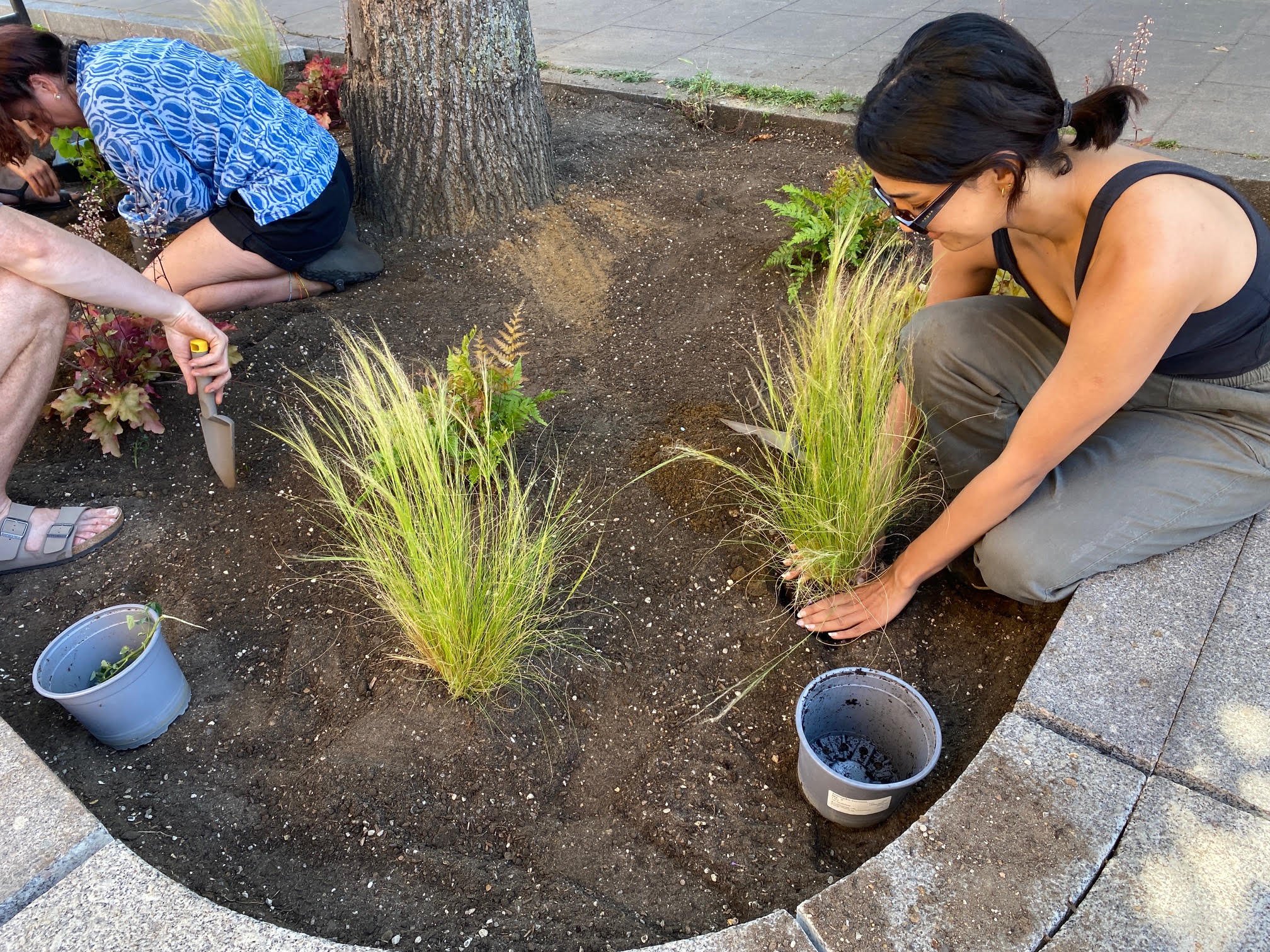
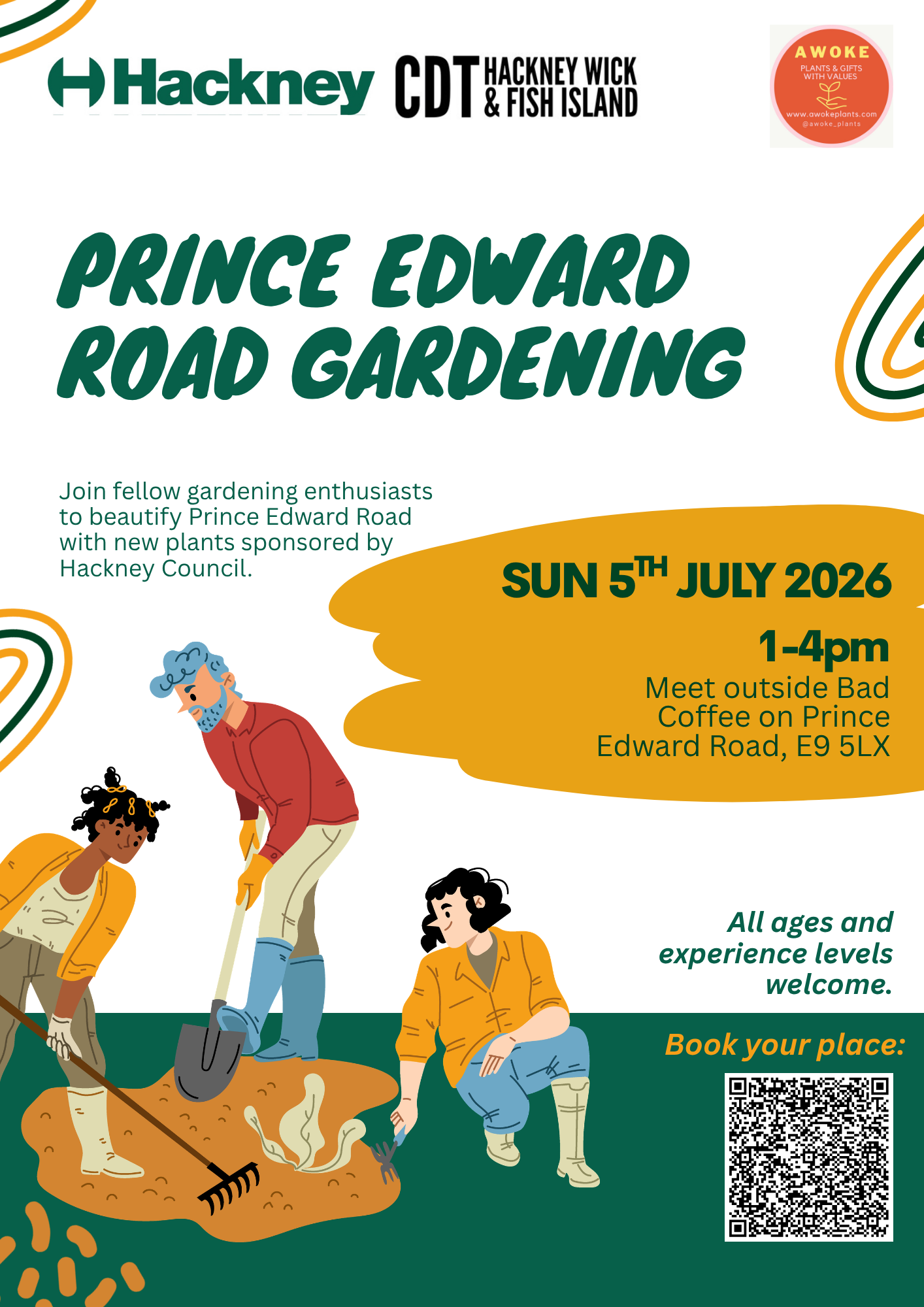
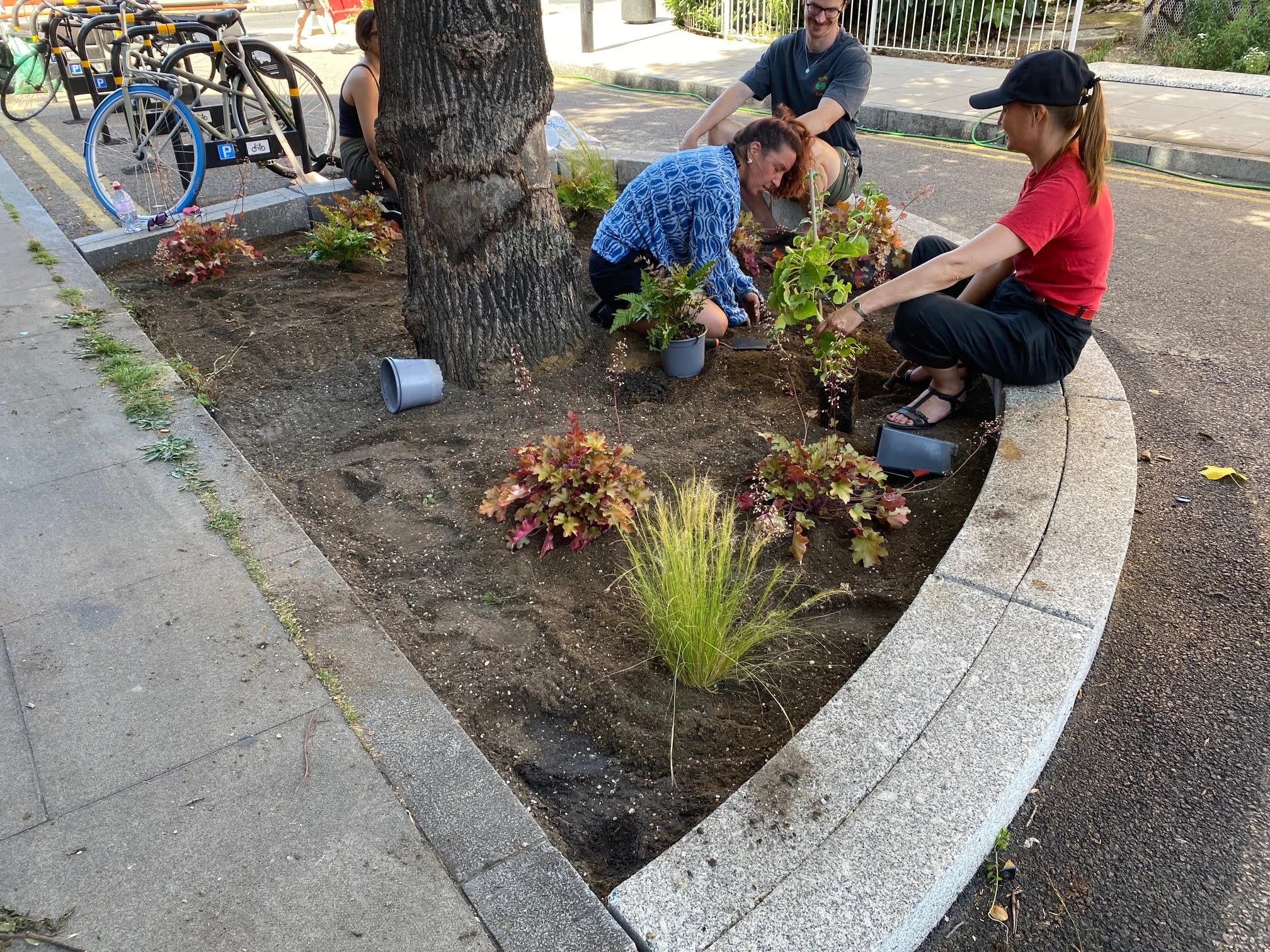
Over the past six weeks we've taken it further. We've planted a community garden on Prince Edward Road as part of the wider regeneration of that whole patch with Hackney Council. And we've begun hosting drop-in sessions at Gainsborough Bridge Gardens — a space we'll be working on for the next couple of years, bringing it back to life alongside local people.
Why this place, and why now
This matters for more than the climate angle. There's a social and cultural one too. This is an area that has faced real challenges. It sits at the intersection between the estates of Hackney Wick and the Olympic Park — a high-density area for families moving between the two schools, and one that has experienced problems with safety.
So really, this is us extending a principle we've always held: preserving the social fabric of the Wick. Perhaps not through our more familiar tools of securing long leases or ownership of land and buildings, but by asking a different question — what are the challenges genuinely worth fighting for, and how do we fight for them together?
This has been a rich area of debate in our Hackney Wick Town Hall. Our job is to stay in listening mode: to understand what local people feel are the most pressing issues of our time, and to work out how to address them in hyper-specific ways, with a real chance of success.
An invitation
What gives us the most hope is how many people have shown an interest. Groups have already learned so much, and we're slowly building a small community of people who genuinely want to keep engaging — with each other, and with these spaces, to bring them back to life.
But this is really an invitation. We'd love to work with you on how to implement right-to-grow policies and improve our green infrastructure in ways that are genuinely equitable.
Come and grow with us. Drop us a line - hello@wickcdt.org