New Research: UCL Impact Report Reveals The Loop's Circular Economy Model Works
A new independent impact report by UCL evaluates The Loop — our circular economy hub in Hackney Wick — as a replicable model for place-based circular economy infrastructure. The findings confirm what we've seen on the ground: community CE hubs work, and they're ready to scale.
Why Circular Economy Hubs Matter
UK cities face major challenges in delivering inclusive and sustainable growth. Zero-waste commitments, sustainable consumption plans, and frameworks like the GLA's Good Growth by Design all call for environmental, social and economic benefits to be rooted in place and delivered to local communities. The Social Value Act requires the same of public procurement.
But the circular economy — where resources are kept in use for as long as possible, waste is minimised, and value is regenerated — cannot grow without the engagement and support of local communities.
That's where community circular economy hubs come in. They create localised ecosystems for reuse, repair, resource sharing and recycling — reducing waste while fostering skills development, community engagement and innovation. According to LWARB, adopting circular practices could add £3–5 billion in value to London's built environment sector alone by 2036, while creating up to 12,000 jobs.
Place-based CE hubs aren't just an environmental imperative. They're a strategic opportunity to reduce waste, unlock economic potential, and deliver inclusive growth rooted in local communities.
The Loop: A Proof of Concept
In late 2023, The Loop emerged as a concept from grassroots engagement with local residents and small businesses in Hackney Wick. Established by the Hackney Wick & Fish Island Community Development Trust & Arbeit Studios it was built on a simple principle: keep buildings in the local area under community ownership and create real agreements for long-term stewardship.
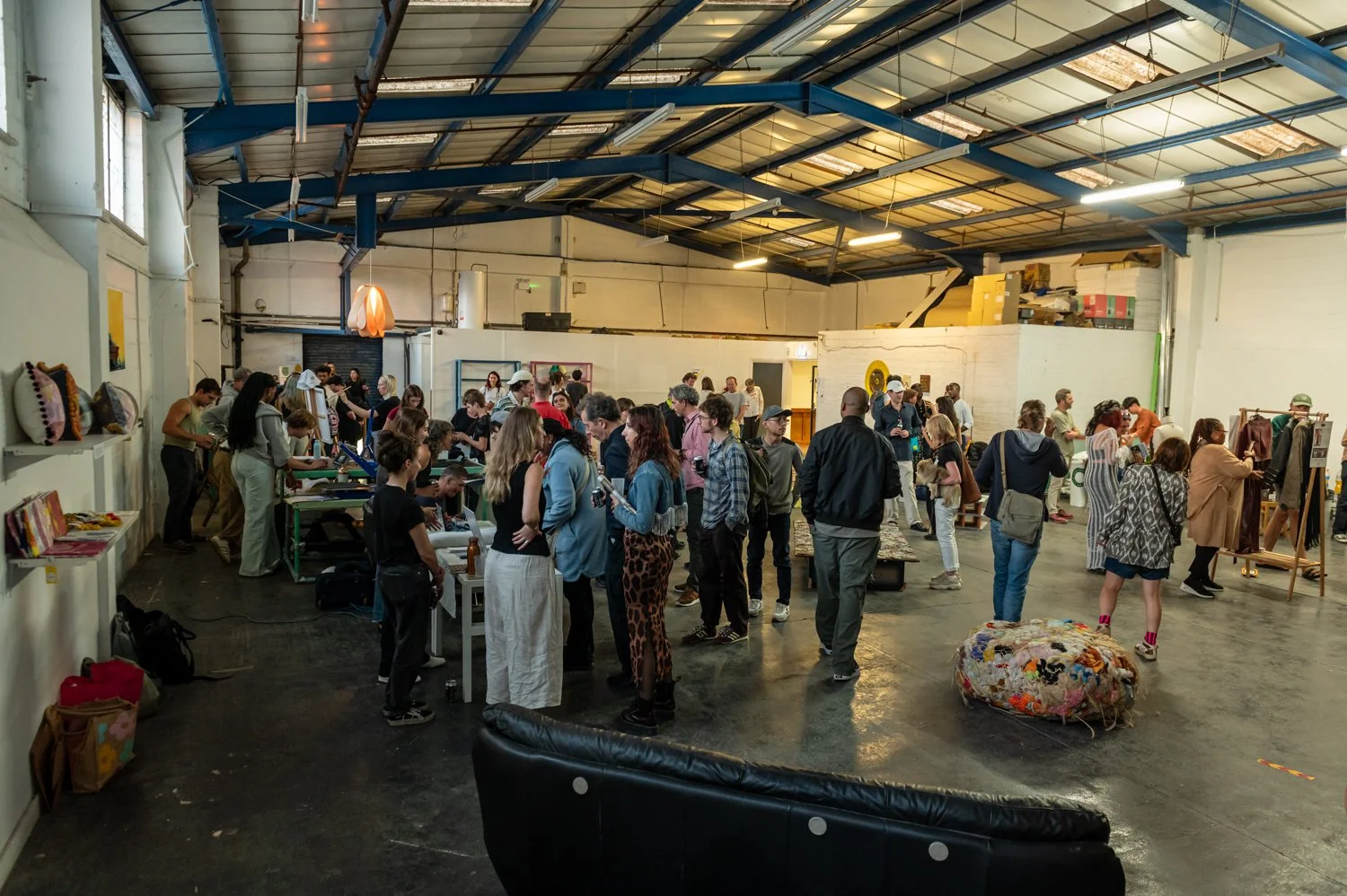
Through an agreement with Halcyon DP, The Loop operates from a repurposed 10,000 sqft warehouse at 119 Wallis Road — providing below-market-rent workspace to circular economy and sustainability-focused MSMEs and VCSEs.
The Loop is categorised by UCL as a Community CE Hub for local SMEs, though its activities cut across material, technology, innovation and knowledge network categories. Activities span plastic waste collection and processing, textile collection and redistribution, natural fibre R&D, furniture and installation crafting, food waste fermentation, reusable container management, and zero-emissions logistics.
"The Loop offers experimental space that is more compatible with smaller startup grants and funding... What we do longer term is...the connecting tissue...actually helping them grow their business and reducing costs, empowering them to do more."
— Patrick Scally, Executive Director HWFI CDT
What UCL Found
UCL's Plastic Waste Innovation Hub (PWIH) conducted an independent evaluation using qualitative semi-structured interviews with The Loop community, with findings mapped against the National TOMs (Themes, Outcomes and Measures) social value framework. The report assessed impact across four themes:
1. Supporting the Growth of Responsible Businesses
One of The Loop's core missions is providing low-cost space to local businesses. For some residents, this gave them the means to establish themselves. Others, like Zhero, reinvested profits into equipment to grow — they now have 30 employees.
The reduced overheads encouraged businesses to test business models. Studio TIP incorporated as a CIC. Zhero and Fantasy Fibre Mill are exploring employee ownership and community/commons ownership structures.
Critically, all businesses surveyed reported that productivity increased as a result of joining The Loop, with 50% reporting being significantly more productive — citing factors like stability, collaboration, knowledge sharing, and having space to refine processes.
Residents have also demonstrated instances of collaboration and mutual support — lending each other materials, labour, knowledge, and including fellow residents on contract bids.

2. Promoting Local Skills and Employment
Most businesses at The Loop qualify as microbusinesses (fewer than 9 employees), reflecting their early-stage nature. Key employment highlights include:
Zhero — the largest employer at The Loop with 30 local employees. 12 FTEs are permanent (minimum London Living Wage), plus approximately 8 FTEs on flexible contracts
Are You Mad — 6 core local staff members and 3 freelancers
40% of businesses have 75–100% of leadership positions held by women
20% of businesses have 25–50% leadership positions held by people from ethnic minority groups
Are You Mad runs a comprehensive programme of secondary school visits across East and North London, engaging pupils on waste, materials and sustainability — bridging the culture gap between sustainability and aspirational consumerism, particularly for demographics facing greater deprivation. They've also highlighted the need for formal vocational qualifications around reuse and waste.
The Loop's sister project, the Textile Reuse Hub, hosts the Sustainable Young Makers Programme (now run by FibreLab, previously Yodomo), supporting young business owners in textiles with business development, mentorship, student internships and work experience placements.
3. Protecting and Improving the Environment
The Loop's businesses are tackling hard-to-manage waste streams through diverse approaches:
Circular processing and production: Looply (soft plastic), FibreLab (textiles), and Flux Fermentation (food waste) use waste materials to create consumer products
Advisory: Are You Mad (plastics) and Studio Tip (construction and furniture waste) advise larger businesses on managing difficult waste streams — both operate on zero-waste principles, ensuring all materials are repurposed
Material distribution: Yodomo collects post-industrial textiles and distributes them for creative reuse — redistributing over 13 tonnes of post-industrial textile waste to local creatives and makers. This is waste that would usually be sent for incineration
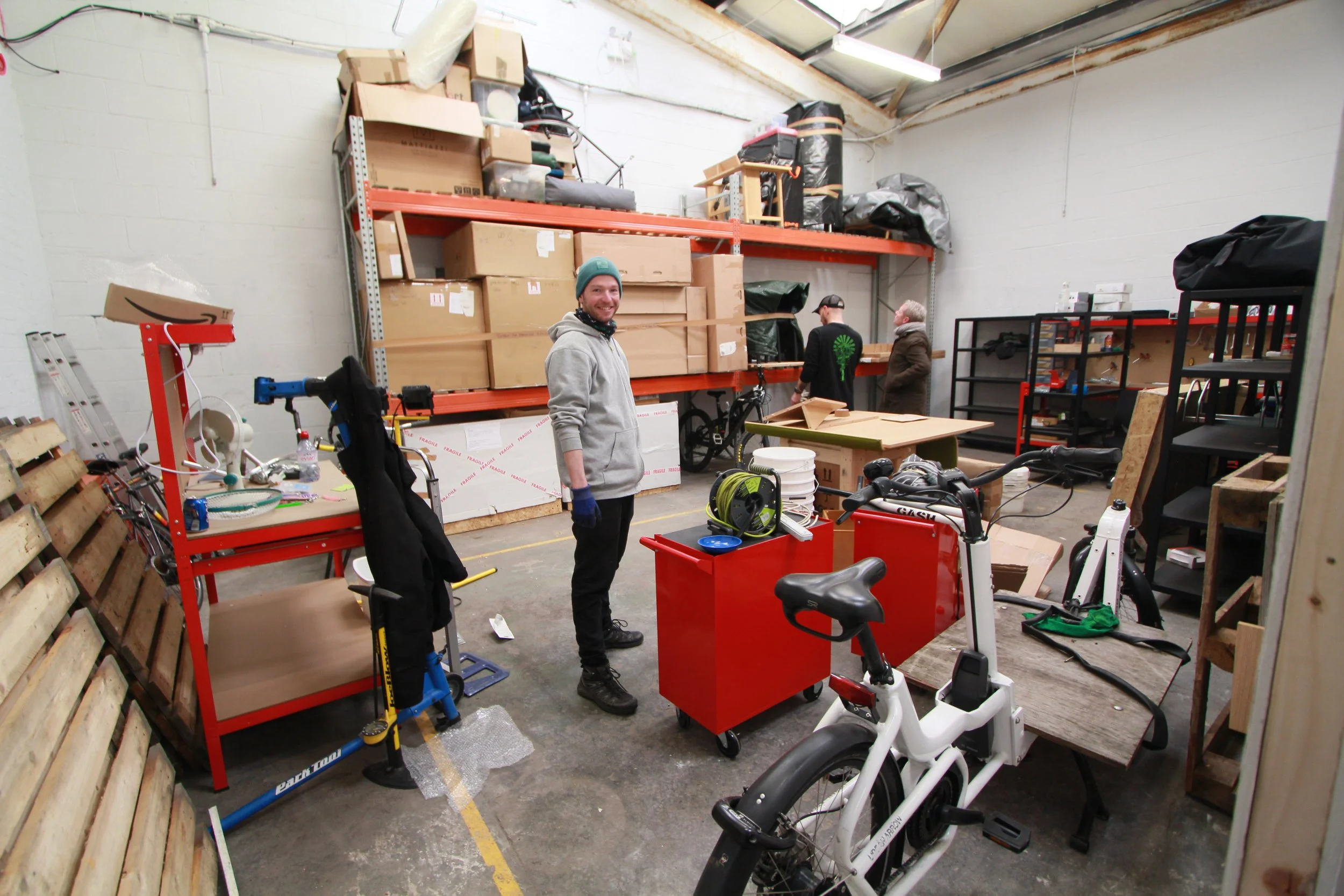
Zero-emissions logistics: Zhero operates a 100% electric fleet of vans and cargo bikes
Regenerative production: Fantasy Fibre Mill works on regenerative flax linen
Spotlight: Looply
Looply collects soft plastics from the local area — one of the most discarded single-use materials — and uses them to make durable products. Their flagship tote bag is a 91% circular product (using WBCSD's Circular Transition Indicators), with manufacturing emissions approximately ~80% lower than a bag made using virgin materials, and ~85% lower than a cotton tote bag of the same size. Across their product range, average product circularity is around 60%, with average emissions reductions of over 45%.
4. Supporting Healthier, Safer and More Resilient Communities
The Loop has a strong ethos of community engagement at its core, carried forward by resident businesses:
Yodomo ran 57 events via the Textile Reuse Hub between 2023–2025, including 12 community events, and supplies materials for local community groups and charities
Zhero provides pro-bono deliveries in long-term partnerships with local food charities — working with them throughout lockdown and volunteering for years
Are You Mad ran a pro-bono educational plastic collection project with local schools in tandem with Zhero
Studio Tip runs "freeplay" workshops for adults and children, fostering creativity and curiosity around materials and circularity using construction and furniture waste
Fantasy Fibre Mill runs natural indigo dyeing workshops to support the local Mobile Garden initiative
Looply runs paid upskilling workshops teaching people to transform soft plastics into usable materials at home
Community engagement happened despite The Loop being a temporary, year-to-year project. Both CDT and businesses noted that the short time horizon was a challenge — but as The Loop has been extended, there's been greater incentive to invest in the local community.
Spatial Design Lessons
As a meanwhile-use project in a repurposed warehouse, The Loop's design was minimal by necessity. UCL documented what worked and what didn't:
What worked well:
Basic fit-out — low cost, encourages experimentation and "getting messy", relatively easy to adapt and modify
Shared open mixed-use space — useful for work overflow, large installations, holding events, and generating extra revenue from one-off external hire
24-hour, 7-day access — cited by many residents as a major benefit
Nearby Library of Things — several residents used it for community tool rental
What needs improving:
Lack of communal space (e.g. shared kitchen) was a barrier to forming internal social networks
Predominantly solid facade limited visibility to public foot traffic, creating a barrier to everyday public engagement
Lack of adequate heating and ventilation limited some processing activities and made winter difficult
No dedicated local community space limited participation and engagement to open days and events — original plans had included community spaces and a café
Lessons Learned
UCL identified key lessons across three stages:
Concept Stage
Local emergence matters. The Loop succeeded because it was shaped by the local citizen and business community, harnessing their energy and responding to local needs
Planning with partners — working with local authorities, developers and building owners to understand how best to use a building is essential
Startup Stage
Social catalysis is critical. Anchor businesses with existing ties to the area generated interest in the project. Residents brought in other residents via their networks. Collaborative working, resource sharing and socialising led to new business opportunities — this works both organically and through facilitated structured events
Systems need work. Simple protocols for sharing materials or services, and templates for impact measurement, would streamline operations
Operational Stage
Transience is a challenge. Short-term tenancy was cited as a barrier. Longer-term security enables deeper engagement with the local area and community
Local employment commitments could be part of evaluating applications from prospective residents
The operator's role evolves — HWFI CDT's role has evolved from day-to-day management to facilitation and connection, helping businesses grow and develop partnerships
Measuring Impact: The Honest Challenge
UCL is transparent about the difficulties of impact measurement for community CE hubs — and this honesty is itself valuable.
There is no single internationally accepted framework to value impact. The OECD identified 474 indicators across national, regional and local circular economy roadmaps, yet key areas remain uncovered — notably the absence of spatial indicators for hyperlocal material processing. London does not yet have a unified framework, though Hackney Council is developing KPIs aligned with the UK's forthcoming Circular Economy Strategy.
For many businesses at The Loop, existing mass-flow indicators like "tonnes diverted from landfill" are limited in conveying impact — partly due to scale, partly due to diversity of activity. The report argues that impact reporting should highlight how these businesses are altering supply chains and behaviour more broadly.
Small organisations face well-documented challenges: lack of knowledge around frameworks, limited resources to collate data, and — perhaps most telling — a lack of recognition that activities like charity work, community workshops and advisory to other businesses count as measurable social impact.
What Happens Next
The Loop has been operated as a proof of concept. Now it becomes permanent.
In a landmark agreement with Halcyon Development Partners, we've secured 7,000 sqft of circular economy workspace for 99 years, rent-free, within a forthcoming development at 115–119 Wallis Road. The model has been validated by UCL.
UCL's report provides a framework for replication. The recommendations are clear: develop capability around sustainability and social value frameworks, implement onboarding protocols for new residents, centralise data collection, facilitate learning between businesses, and maximise community feedback loops.
This isn't theory. It's a typology that can be replicated in neighbourhoods across the country. And we've got the evidence to prove it.
Download the full report here
Acknowledgements
Research and report by UCL PWIH (Plastic Waste Innovation Hub). Funded through the UKRI EPSRC Impact Acceleration Account grant via UCL Innovation & Enterprise. Special thanks to Looply, Morris+Company and Sophie Percival for photography.
Contact: research@instituteofmaking.org
To learn more about our work, or to discuss how this model could be replicated in your area, get in touch at patrick@wickcdt.org or visit wickcdt.org.